Blog
Are Nutrition Labels Accurate: Some Label Fables Exist

Food labels started as a straightforward tool: tell consumers what’s in a product so they can make informed choices. Over time, however, packages picked up extras like marketing claims, badges, and design tricks that can influence buying decisions and sometimes mislead consumers.
For nearly two decades, as education director for Arizona Farm Bureau I’ve been researching the food label issue, giving presentations on the topic and helping families sort through the maze of confusion surrounding nutrition food labels.
Here’s a clear look at what those “extras” mean and how they are regulated (or not).
The Regulatory Agencies and Their Roles Must Be Understood First
- United States Department of Agriculture (USDA) – Regulates meat, poultry, and processed eggs.
- Agriculture Marketing Service (AMS)– A USDA agency that facilitates fair, efficient marketing of American agricultural products. Sets the quality standards and grades for dairy, meat, vegetables, and more. The AMS oversees the standards for the National Organic Program and accredits agents to certify producers. Among other roles.
- Food Safety and Inspection Service (FSIS) -A public health regulatory agency within the USDA responsible for ensuring that domestic and imported meat, poultry, and processed egg products are safe, wholesome, and correctly labeled.
- Food and Drug Administration (FDA)– Regulates all packaged foods which accounts for nearly 80% of all foods.
- Federal Trade Commission (FTC)– Regulates product labels to prevent unfair or misleading marketing. Enforces the Made in USA claims.
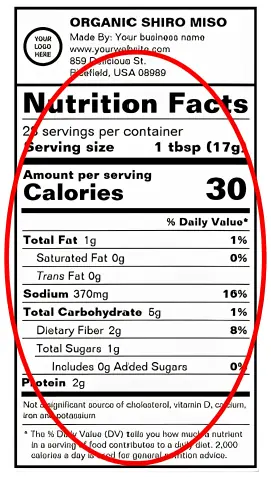
This label should look familiar as it is required on all food items. Also known as the nutrition label, this provides consumers with information regarding serving, serving size, nutrition facts, ingredients, and potential allergens. This label is managed by the FDA, and all required components must be present and accurate. It’s the main label for you to read and the one most valuable to your effort in understanding what are all the ingredients.
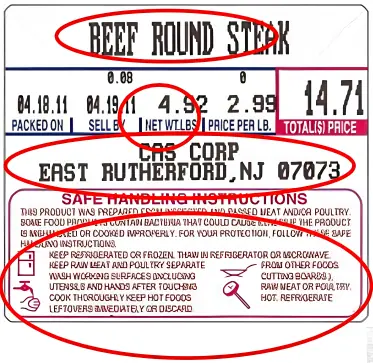
This is a label that will look familiar to all the meat eaters out there. Required on all meat packages this label informs the consumer of what the item is, the net weight, the address where it was processed and packaged, and handling instructions regarding temperature and cooking. All required components for the label managed by the USDA.
Nutrition Labels: Where It All Goes Blurry
Marketers, influencers, and others have made it difficult to decipher the dozens of labels that cover our foods. Even labels that are factual with no fluff can mislead unknown shoppers. Take for example this label.
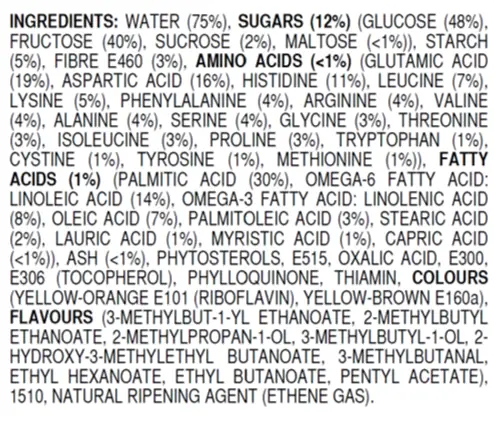
Influencers such as the “Food Babe” would have you convinced to stay away from this product. Its ingredient list is riddled with names that you and I cannot even pronounce. And we all know if it is hard to pronounce it is bad (insert sarcasm). Well, stay away from those evil bananas because this my friends is what you are getting. A BANANA!
While the scientific names for ingredients might be unpronounceable by your and I, a quick check of definitions typically reveals a very innocent, healthy ingredient is included. Don’t let big scientific terms intimidate you.
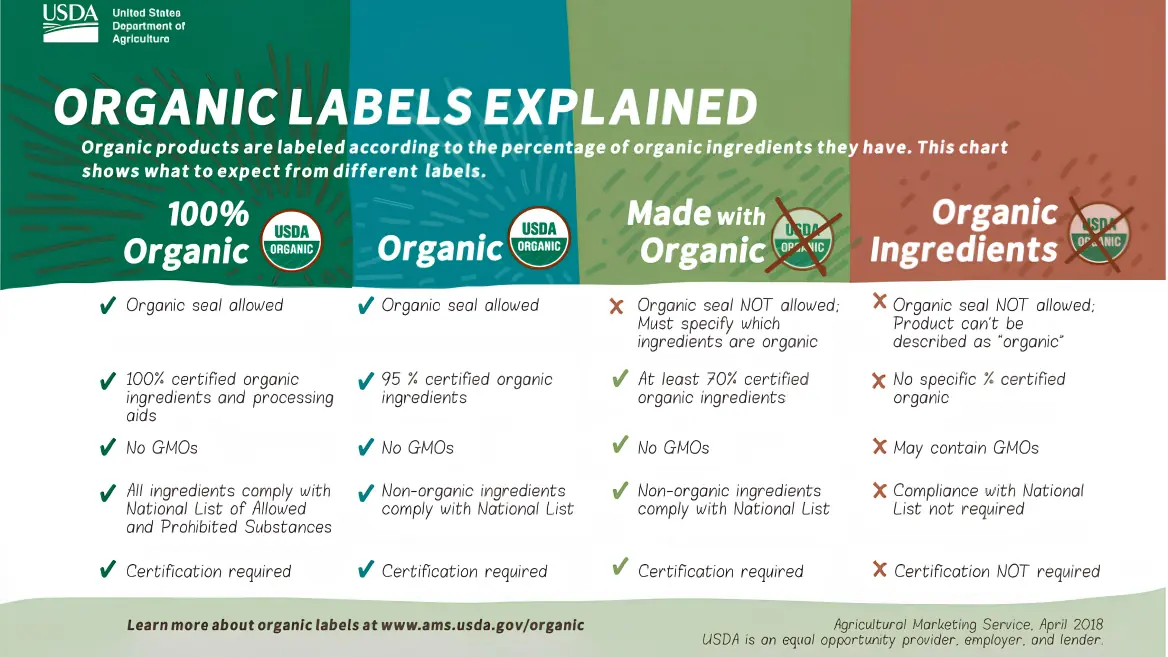
The organic label is one that should be straight forward. However, what many consumers do not realize is that there are different levels for organic. When the term is used in partnership with the USDA Organic seal, it indicates that the label is managed by the USDA and accurately matches the USDA standard. For accurate organic information, the USDA Organic seal must be present. If it’s not, be suspicious.
What about the Gluten Free label?
The gluten free label is a voluntary label and can be used at a food manufacturers discression as long as it meets FDA’s requirement of containing less than 20 parts per million (ppm) of gluten.
So maybe it is not really gluten free? Looking for gluten free? Seek out foods that do not contain wheat, barley or rye as these are the only ingredients that contain gluten.
The All Natural Label: Beware
Although consumers are likely to interpret this as organic, or safer to eat, or GMO free, or as a healthier food choice, it does not necessarily mean any of those things.
The FDA does not have a formal definition for the term natural although they do regulate the term when it is applied to meat, poultry and eggs. What does it mean on these products? Only that the “product contains no artificial ingredient or added color and is only minimally processed”.
The natural label is not meant to address food production, processing or manufacturing methods. Nor does it speak to a food’s nutritional value or health benefits.
The Non-GMO Project Label: Slapped on Products that Are not Even GMO!
The Genetically Modified Organism (GMO) is a topic of conversation in many food circles. So, what does the label look like and who manages it? Not the FDA or the USDA. Nor do they publish a non-GMO labeling stance or standard. The FDA does, however, have a consumer-facing website to help educate the public on the benefits and the safety of GMOs.
There are cases, like the butterfly label, that indicate a 3rd party verification. This particular verification requires:
- An application
- A $115 fee for the non-profit reviews your product list to be sure it meets their standards
- Usually takes 3 to 6 months
- Requires an annual renewal
The interesting thing about this label is it is often found on food items and products that are not even transgenic (genes from one organism artificially inserted into another non-related organism). Perhaps a better direction would be to educate consumers on what items are transgenic and allow them to make their own decision from there.
So, in an effort to clear up any confusion here are the only transgenic items available in the United States:
- Corn
- Alfalfa
- Cotton
- Summer squash (specific yellow crookneck squash and green zucchini)
- Papaya (Rainbow Papaya only)
- Apples (Trademark Arctic Apple only. Available as dried fruit or pre sliced.)
- Sugar beets
- Canola
- Soybeans
- Potatoes (Innate Potato)
- The Purple Tomato
If you still have concerns about GMO products, if you know those transgenic items, they are actually easy to avoid without a label. All your basic food found in the outer aisles of the grocery store, you basic items, like eggs, dairy, meats, fruits and vegetables (with the exception of a very few fruits and vegetables and the Innate potato that are identified), you can easily avoid GMO products.
The Buzz Around Local
Although there is a lot of buzz around this label and the term local, it might not mean what we think it means. What does natural or local mean?
Everyone I ask has a slightly different interpretation of what the term means to them personally. However, in general, the term local recognizes food grown within 400 miles.
Third party certifying entities are developing their own standards and meaning for the word. Consumers will have to look up those 3rd parties to find the meaning of that particular label.
When looking at different retailers and their labels, their definition of local doesn’t always match that 400 miles. And in many cases does not match that self-described definition of close by that we all think of when we hear the word.
A couple of examples: Walmart defines local as the product was grown, produced, or sourced in the State in which it is being sold. Whole Foods defines the term local as the product did not travel more than 7 hours by car or truck from where it is being sold. Chipotle defines local as the product coming from no more than 250 miles from one of its 20 distribution centers.
Cage Free: Don’t Be Fooled

What it means – According to the USDA, Cage Free Eggs are laid by hens “that are able to roam vertically and horizontally in indoor houses and have access to fresh food and water. Cage-free systems vary from farm-to-farm and can include multi-tier aviaries. They must allow hens to exhibit natural behaviors and include enrichments such as scratch areas, perches and nests. Hens must have access to litter, protection from predators and be able to move in a barn in a manner that promotes bird welfare.”
What is does not mean – Cage-free eggs came from hens that had access to the outside.
Range Free: Again Don’t Be Fooled
What it means – According to the USDA, eggs labeled Free Range “must be produced by hens that are able to roam vertically and horizontally in indoor houses, and have access to fresh food and water, and continuous access to the outdoors during their laying cycle. The outdoor area may be fenced and/or covered with netting-like material. Housing systems vary from farm to farm and can include multi-tier aviaries. They must allow hens to exhibit natural behaviors and include enrichments such as scratch areas, perches and nests. Hens must have access to litter, protection from predators and be able to move in a barn in a manner that promotes bird welfare.”
What is does not mean – That hens are raised in a pasture of grass or that hens spend their lives outdoors.
These term are verified by the AMS when it also includes a USDA Grade Shield on the package.
Grass Fed: Again Labels can Confuse
The USDA defines grass-fed, but they do not actively regulate the term in all cases. The term grass fed may allow for grain finishing. Grass Finished means that animal ate grasses and forages for its entire life.
Looking for something more specific? Check out the various 3rd party certifications and their meanings for the label.
New Label trends to be on the Lookout for in 2026
As we head into 2026, front-of-package nutrition labeling is set to become a major focus for food manufacturers and regulators alike. Proposals in the U.S., such as the FDA’s “Nutrition Info” box, would highlight saturated fat, sodium, and added sugars with simple “low,” “medium,” or “high” ratings alongside percent daily values, making it easier for shoppers to spot concerning levels at a glance. Similar rules are already rolling out in places like Canada, where high-in-sugar, sodium, or saturated-fat products must display prominent warning symbols.
Another key trend gaining momentum is the rise of climate-conscious claims on packaging. This includes everything from eco-friendly materials and reduced emissions to circular packaging systems. Expect more “carbon labels” and assertions that tie environmental impact directly to product choices. Of note, they do not ensure you’re eating healthier products.
Finally, increased use of QR codes will continue. No longer just a novelty, these scannable links should allow for deeper details on ingredients, allergens, sourcing, nutritional breakdowns, or sustainability metrics that won’t fit on the label itself.
The Major Points to Future Labeling
- Front of package nutrition labels for sodium, sugar and fat
- Rise of climate conscious claims that have no bearing on nutrition
- Increased use of QR codes
Personally, the main label that identifies the specific ingredients and daily value percentages are enough for me. Stick to the basics, found on the outer aisles of the grocery store.
By Katie Aikins, Arizona Farm Bureau Director of Agriculture Education


Featured Recipes
COTTAGE CHEESE & BLUEBERRY BREAKFAST BAKE
Read More
Warm Your Soul Lasagna Soup
Read More

Pear Lime Jello Salad
Read More