

Farm Facts That Feed You
Arizona Water Use Facts
Back
Arizona Water Use Facts
Water Use Facts
- Groundwater makes up the largest source of water in Arizona, at 41%.
- The Colorado River comprises about 36% of Arizona’s water supply, followed by 18% from in-state rivers and 5% from recycled water.
- Arizona is estimated to use about 7 million acre-feet of water a year. That’s slightly less than in the 1950s, thanks to improved conservation methods and less water for agriculture.
- An acre-foot of water is nearly 326,000 gallons. It’s enough to serve at least 3 single-family homes or grow a quarter-acre of alfalfa each year, though that can vary widely depending on efficiency, weather and location.
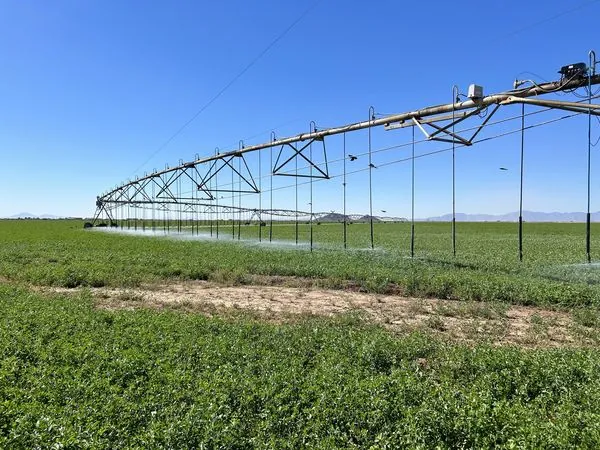
- Irrigated agriculture uses 72% of Arizona’s water, a percentage on par with other western states.
- Municipal uses, such as homes, shopping centers and factories, account for 22% of Arizona water use, while industrial uses — a broad category that includes everything from dairies to golf courses to mines and power plants — account for 6%.
- The 1980 Groundwater Management Act laid the groundwork for rigorous water conservation in Arizona. It created groundwater active management areas and required water providers to secure supplies that could serve customers for 100 years.
- More than 7 million acre-feet of water has been stowed in multiple underground storage areas across metro Phoenix, Tucson and Pinal County. Cities and other long-term storage credit holders have saved this water for a (non)-rainy day.
Colorado River Facts
- The Colorado River is split into two areas: The Upper Basin, which includes Colorado, New Mexico, Utah and Wyoming, and the Lower Basin, which includes Arizona, California and Nevada. Mexico is also part of the Lower Basin.
- A century’s worth of law, treaties and court cases — often referred to as “the law of the river” — created the framework for how water should be distributed among these basins, states, tribes and other users.
- Distribution has historically followed the prior appropriation doctrine — or “first in time, first in right.” In the Lower Basin, California generally has more senior water rights to Arizona, and within Arizona, Yuma generally has more senior rights than the Central Arizona Project, which primarily serves cities and tribes in metro Phoenix and Tucson.
- The 1922 Colorado River Compact allocated 15 million acre-feet to states each year, split equally between the Upper and Lower basins. A 1944 treaty allocated another 5 million acre-feet to Mexico.
- The Colorado River no longer generates nearly as much water as the compact guarantees. Annual inflows have averaged about 10 million acre-feet since 2020.
- Water users across the basin have trimmed use by millions of acre-feet, but the river’s two largest reservoirs — Lake Mead and Lake Powell — are now at historic lows.
- The seven basin states could not agree on how to manage the lakes, so the federal government imposed a plan for the next 10 years that could include cuts of up to 3 million acre-feet a year in Arizona, California and Nevada.
- A 3 million acre-feet cut is deep enough to dry up the Central Arizona Project and idle thousands of acres of Yuma farmland.
Agriculture Water Use Facts
- Steady sunlight and reliable irrigation allow for long and stable growing seasons, making Arizona farmland among the nation’s most productive. Our state consistently leads others in average alfalfa and cotton yields, for example.
- Farmers often refer to this as getting “more crop per drop” of irrigation. Growing an equivalent amount of these crops elsewhere would likely require more land and water.
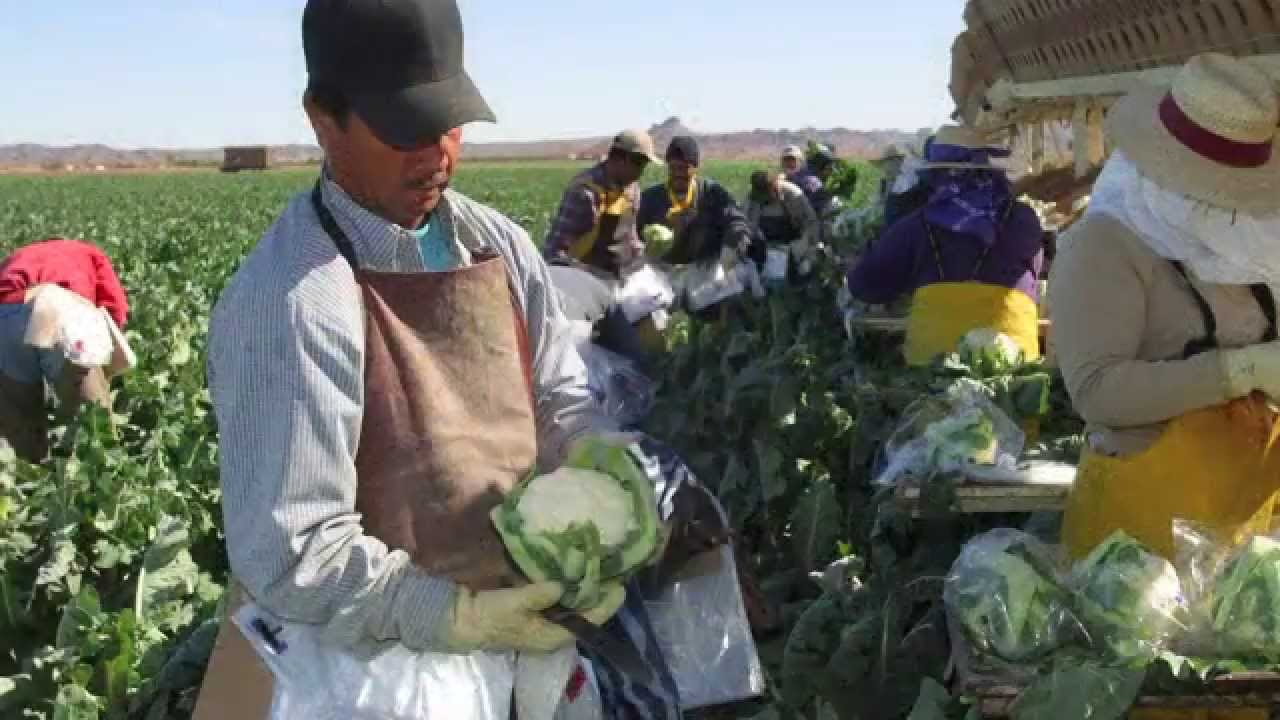
- Yuma supplies the nation with as much as 90% of its leafy greens and vegetables during the winter. Few other growing areas have the mild winter climate necessary to produce these foods domestically.
- Milk is Arizona’s second-largest commodity, next to vegetables and melons. People don’t directly eat alfalfa, also a major Arizona commodity. But it is a dietary staple for milk-producing cows. Most of the alfalfa grown in Arizona is sent to in-state dairies.
- Similarly, most of the milk produced at Arizona dairies is either consumed locally or processed locally into other dairy products. Nearly three-fourths of those products remain in the United States.
- Arizona cattle ranches produce enough beef to feed 8 million Americans a year. Most of this production occurs on millions of acres of public lands, which rely on rainfall, not irrigation.
- Irrigation efficiency — that is, the percentage of water that makes it from water systems to plants — in Yuma and Willcox the average is around 85%, an exceptionally high rate for agriculture.
- Precision land leveling, soil moisture monitors, new seed varieties and other irrigation best practices are among the reasons why farmers are so efficient.


Our Latest Posts

Protein Is in Everything Now: Do We Really Need More of It?
When I first started taking fitness and nutrition seriously, protein was one of the first things I learned to pay attention to. I knew it…

National Pork Month: Budget-Friendly Arizona Pork with Big Flavor
When Arizona families plan dinner, pork is rarely the mystery protein. It is the bacon that starts a Saturday, the chops that come off the…
Featured Recipes


Provided by: Garry Domingue, Rosie on the House Producer and Foodie