
Blog
What Nutrition Does Celery Have: The Game Day Crunch That Quietly Pulls Its Weight
There are two kinds of people on game day.
The ones who sprint to the wings like it’s the opening kickoff and build a mountain of nachos that defies gravity.
And then there’s me.
I’m the guy who strategically stacks his plate so I can eat all day and still move without regret tomorrow. I want the wings. I want the dip. I absolutely want the chips. But I also want to wake up the next morning feeling like a functioning human.
If you fall into that second camp, or if you just like balancing out your buffalo with something crunchy and refreshing, then celery might be your stealth MVP.
When I walk up to the snack table, celery is always there. Not flashy. Not dramatic. It’s not trying to outshine the queso or compete with the seven-layer dip. It just sits there, cool and green, like it knows something the rest of the table doesn’t.
And honestly? It kind of does.
Celery is the quiet friend who keeps you grounded when everyone else is getting a little out of control. It’s the reset between spicy wings. The crunch that cools things down. The bite that makes you feel like you’re making at least one responsible decision while the score is tied, and emotions are running high.
But make no mistake: what celery lacks in hype; it makes up for in real nutrition that registered dietitians highlight. This isn’t just decorative filler on the veggie tray. There’s substance behind that crunch.
And, while I may sharing my fondness for celery found on the veggie tray, it’s a perfect vegetable found in an assortment of recipes that doesn’t always get its just due.
So, what nutrition does celery have, and why does it deserve a permanent spot alongside your wings, dips, and game-winning snacks?
Celery 101: Low Calories, High Hydration
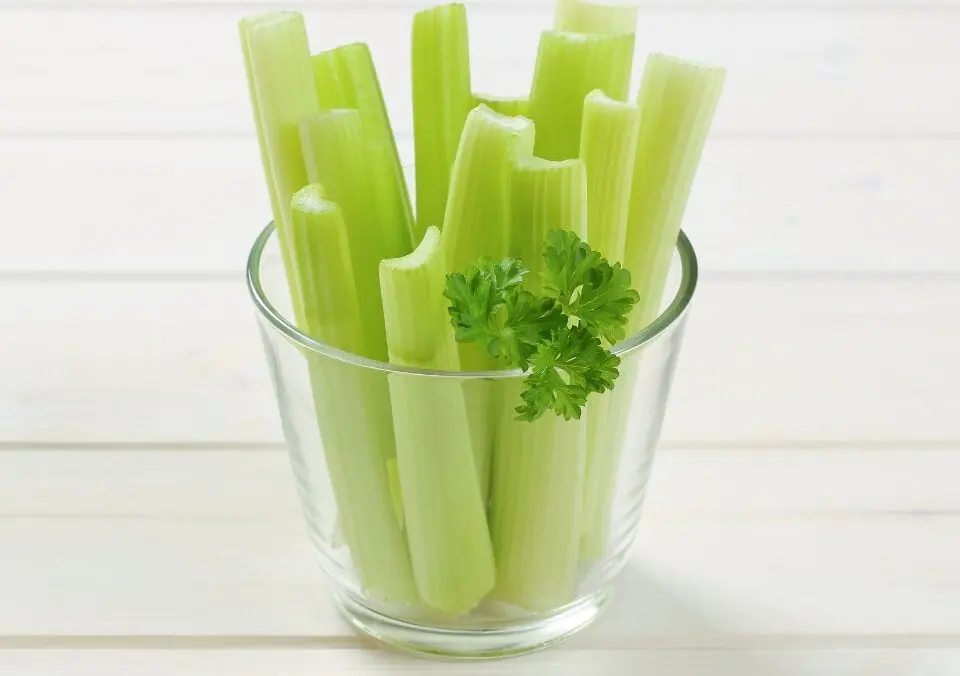
First things first: celery is almost unfairly light on calories. One medium stalk has about 10 calories, so you can stack a plate without stressing the scale. That makes it an easy choice for people who want something crunchy that doesn’t overwhelm.
But here’s something that RD pros point out again and again: celery’s water content is a huge part of its value. Celery is about 95% water, so it helps with hydration as you snack, which is nothing when your spread leans salty, and people keep passing the chips.
According to the Cleveland Clinic, this water helps with fluid balance and overall hydration.
Think of celery like mission control for your snack plate, helping you stay balanced while everyone else dives head first into the indulgent stuff.
Antioxidants and Plant Compounds: More Than Crunch
Celery isn’t just water and crunch. Registered dietitians discuss the plant compounds in celery that add real health value.
Healthline notes that celery contains antioxidants like flavonoids and vitamin C, which help protect cells from oxidative stress.
Here’s why that matters: when you’re eating rich foods, especially during events like game day, antioxidants help your body manage inflammation and stress at a cellular level. It doesn’t make celery a “cure” or a magic bullet, but it does mean it’s contributing more than just empty crunch.
Vitamins That Add Up
Celery doesn’t come with a huge nutrient punch like kale or spinach might, but it brings a steady contribution of important vitamins and minerals that RD professionals often call out.
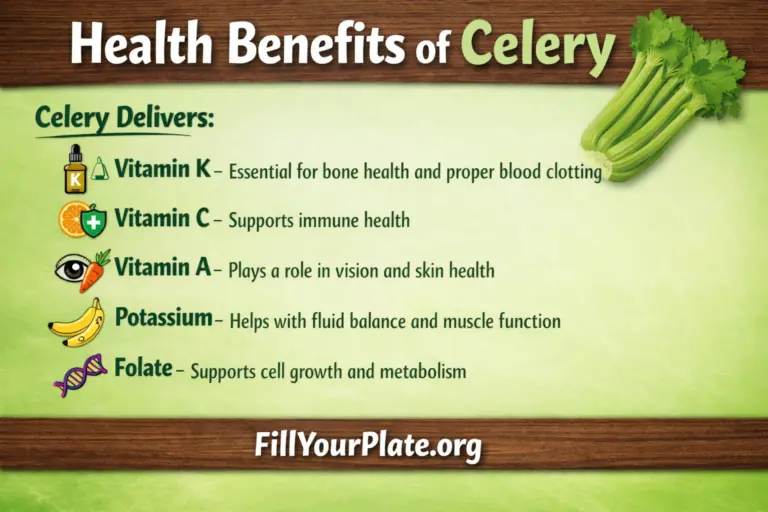
According to WebMD, celery delivers:
- Vitamin K — essential for bone health and proper blood clotting
- Vitamin C — supports immune health
- Vitamin A — plays a role in vision and skin health
- Potassium — helps with fluid balance and muscle function
- Folate — supports cell growth and metabolism
Here’s how that looks in real life: you’re snacking, your friends are riffing on fantasy lineups, you’re taking one bite of celery between wings — and you’re actually getting micronutrients that support your bones, immune system, muscles and hydration at the same time.
Fiber That Supports Digestion
Fiber is one of those things that dietitians always bring up because most of us could use more of it — especially on days when meals are heavy, and dessert is calling.
Celery contains dietary fiber, which supports digestion and helps you feel full longer. The Cleveland Clinic highlights this, noting that fiber helps with regular digestion and can keep you feeling satisfied between plays.
Fiber doesn’t just keep you regular, it helps slow digestion, so your energy doesn’t spike and crash. That means you can go from kickoff through overtime without feeling like you need a nap.
Because of this, celery works out for you not just as a snack but added to salads and numerous other recipes for taste, crunch and of course the fiber.
Celery and Heart Health: Not Just Hype
Some of the RD articles go deeper into celery’s role in overall heart health. Celery contains phytonutrients that may support healthy blood pressure, and because it’s naturally low in sodium, it’s a smart swap when you’re grazing on salty foods.
So, while celery alone won’t “fix” your blood pressure, making it a regular part of your eating pattern can support the things dietitians talk about when they talk heart health.
Celery on Game Day: Let’s Get Tactical
Game day snacking can easily tilt toward heavy, salty, cheesy, and delicious. But that’s also where a balanced approach wins.
Celery is perfect for:
- Ranch or buffalo dip cooldowns — a crisp bite between spicy hits
- Hummus pairing — a protein + fiber combo that fills you up
- Anticipatory snacking — eat before the party to avoid overeating later
- Hydration boosts — especially in warm environments or long afternoon games
Here’s a personal confession: on Sundays, I always stack my plate like a nutritionist. Wings go on one side, chips on the other, and celery acts like the peacekeeper in the middle — refreshing, crunchy, and helpful.
I’ll scoop hummus on celery like little edible spoons. I’ll trade out chips for celery with buffalo chicken dip. Every bite becomes a chance to bring balance back to the plate. That’s not food policing, it’s strategy.
Celery is surprisingly versatile:
Celery Boats with Protein
One tasty example is a healthy tuna salad with celery and hummus, a protein-rich combination that makes a satisfying snack or meal addition. Healthy tuna salad with celery & hummus recipe (by an RD).
Game Day Ants on a Log
A classic kid-approved snack that adults love, too. Peanut butter + raisins on celery equals protein, fiber, and sweetness without going overboard.
Celery in Soup
It works with chicken noodle, minestrone, or lentil soups — adding flavor and texture.
Celery Smoothie Add-In
Blend celery with apple, spinach, and cucumber for a refreshing green smoothie — great before a game or workout.
Even if celery doesn’t always steal the show like loaded nachos, it plays a quiet but meaningful role in your overall nutrition, and that’s something RD pros consistently point to.

Why Dietitians Include Celery on Balanced Plates
If you skim RD-reviewed nutrition sites, you see a recurring message: foods like celery may not be superstars individually, but in the context of a varied diet, they matter.
Here’s how RDs talk about celery:
- “Celery contains antioxidants and phytonutrients that support overall health.” (Healthline, Natalie Butler, R.D.)
- “Celery offers hydration and micronutrients that contribute to balanced eating patterns.” (WebMD/Diana Mesa, RDN)
- “Fiber from vegetables like celery supports digestion and satiety.” (Cleveland Clinic/Amber Sommer, RDN, LD)
Experts emphasize variety, balance, and the inclusion of vegetables because they provide micronutrients, fiber, and compounds that work with other foods to support health.
Celery checks a lot of boxes without making noise, providing hydration, crunch, fiber, vitamins, and a simple way to balance out heavier options.
Celery is not the flashy star of the snack table. It’s not dripping in cheese or smothered in sauce. It’s not going viral. But it plays a strategic role. And I love strategy.
On game day, and honestly in everyday life, I’m not just eating. I’m building a plate that lets me enjoy the moment without paying for it later. That’s where celery quietly earns its spot.
Here’s what it brings to the table:
- Low calories so I can stack my plate without stacking regret.
- High water content helps with hydration when everything else is salty.
- Real vitamins and minerals that actually support my body.
- Fiber to keep digestion moving and energy steady.
- And the perfect crunch to pair with protein-packed dips, hummus, buffalo chicken, or even a swipe of peanut butter.
Registered dietitians are clear about this. Celery isn’t some miracle superfood that’s going to change your life overnight. But it is smart. It’s intentional. It’s the kind of food that supports balance instead of chaos.
And balance is the goal.
So, if adding a few stalks to your game day spread means you can enjoy the wings, the chips, and the dip without feeling wrecked the next morning, that’s not boring. That’s winning. And I’ll take that win every time.
Joel Carr Arizona Farm Bureau Strategic Communications Manager



Featured Recipes

COTTAGE CHEESE & BLUEBERRY BREAKFAST BAKE
Read More

Warm Your Soul Lasagna Soup
Read More
Pear Lime Jello Salad
Read More