
Blog
Crunching the Numbers on Arizona Agriculture: What the Latest USDA Census Reveals About Our Farms and Families
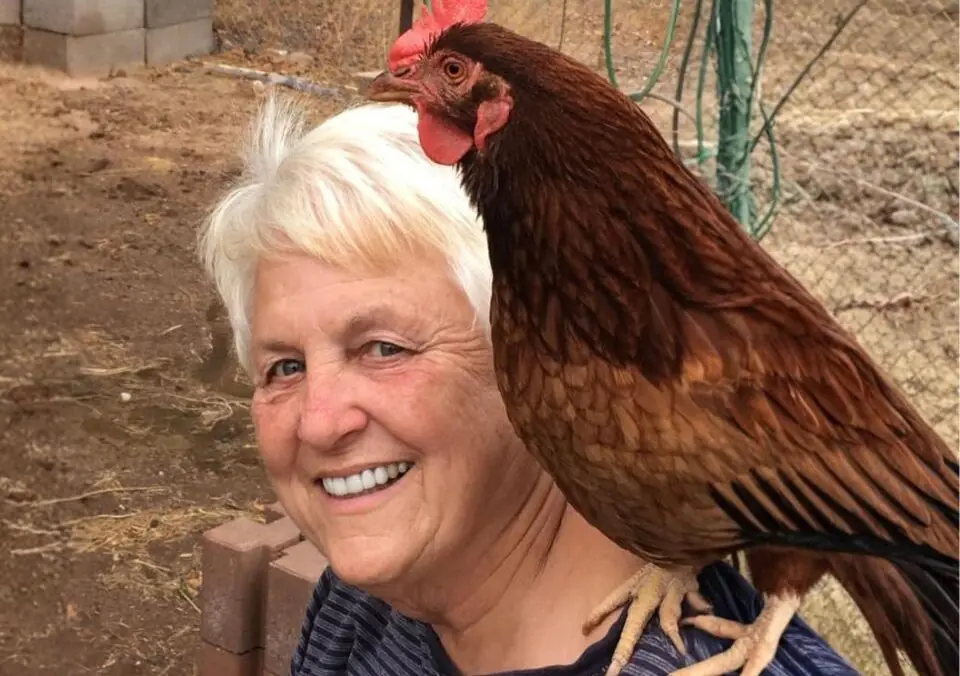
Three generations of the Caywood family work on their farm in Pinal County. Begun in 1930, the farm is currently a women-owned operation with the eldest generation in her 60s.
A grandson is hoping to carry on the Caywood farming tradition; he represents young producers seeking to farm in Arizona.
The Caywood farm is one of the 16,710 farms and ranches dotting the Arizona landscape. The family represents many of the demographic categories that the USDA Census of Agriculture counts.
The broader meaning of all of this is that every time you and I sit down for a meal with fresh Arizona lettuce, juicy melons or locally raised beef, we’re tasting the hard work of thousands of Arizona farm and ranch families.
Each bite of food represents a farm family, a demographic, a story.
The Census of Agriculture is conducted every five years by the U.S. Department of Agriculture’s National Agricultural Statistics Service (NASS). It’s the most comprehensive count of America’s farms and ranches, capturing everything from the number of operations and acres farmed to who’s doing the farming and how operations are structured.
The 2022 results for Arizona were released as part of the full national report in 2024 (time from data capture in 2022 to final reporting in 2024), providing a valuable snapshot of our state’s ag community.
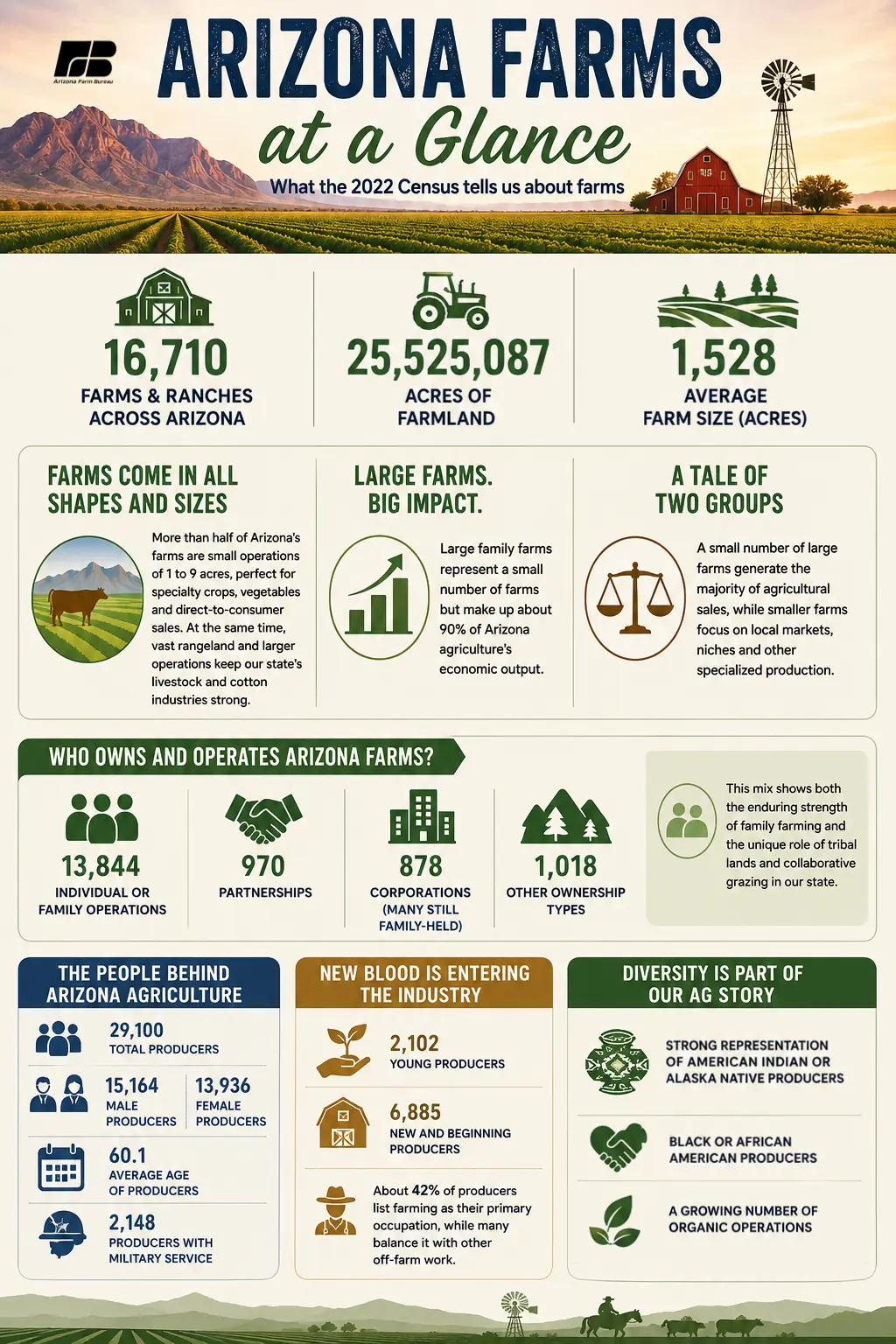
Arizona Farms at a Glance
What the 2022 Census tells us about farms:
- 16,710 farms and ranches across Arizona
- 25,525,087 acres of farmland
- Average farm size: 1,528 acres
Arizona’s farms come in all shapes and sizes. More than half (about 55%) are small operations of 1 to 9 acres, perfect for specialty crops, vegetables and direct-to-consumer sales. At the same time, vast rangeland and larger operations keep our state’s livestock and cotton industries strong.
The diversity of farm size and type of operation is a story all its own. Arizona Farm Bureau and our other organizations celebrate both small and large farms, organic, conventional and biotech. Farming of every form matters to what we do in Arizona agriculture.
Large family farms represent a smaller number of the state’s farms and ranches but make up about 90% of Arizona agriculture’s economic output.
According to USDA NASS, there were 433 farms with annual sales of $1 million or more. These represent only 2.6% of Arizona’s total 16,710 farms. These large farms dominate the state’s direct agricultural output: They accounted for 94% of Arizona’s total agricultural commodity sales (approximately $4.89 billion out of $5.2 billion in market value of farm and ranch products sold).
Production is even more concentrated at the top: Just 177 farms with sales of $5 million or more (about 1.06% of all farms) generated roughly 83% of total sales.
This concentration is typical in modern agriculture, where large-scale operations (mostly family-owned in Arizona) achieve economies of scale in crops such as vegetables/melons, cotton, hay or livestock. Without them, we’d be unable to feed our nation; you and me.
Smaller farms (many under $50,000 in sales) make up the majority by number but contribute a tiny share of total sales — often focusing on direct markets, niches or hobby/subsistence production.
Who Owns and Operates Arizona Farms?
Most Arizona farms are still family-run:
- Individual or family operations: 13,844 farms (the vast majority)
- Partnerships: 970 farms
- Corporations: 878 farms (many still family-held)
- Other (including estates, trusts, grazing associations, and American Indian Reservation lands): 1,018 farms holding a huge share of the acreage
This mix shows both the enduring strength of family farming and the unique role of tribal lands and collaborative grazing in our state.
The People Behind Arizona Agriculture
Farming in Arizona is a family affair — and a diverse one:
- Total producers (people making day-to-day decisions): 29,100
- Male producers: 15,164
- Female producers: 13,936
- Average age of producers: 60.1 years
- Producers with military service (veterans or active duty): 2,148 operating 1,938 farms
New blood is entering the industry, too:
- Young producers (35 and under): 2,102
- New and beginning producers (10 years or less operating any farm): 6,885 producers on 4,556 farms
About 42% of producers list farming as their primary occupation, while many balance it with other off-farm work, showing the adaptability of Arizona farm families.
Diversity is part of our ag story:
- Strong representation of American Indian or Alaska Native producers (16,913) — Arizona has the largest number of American Indian farms, and many are matriarchal, meaning the female is the primary farm owner/operator
- Black or African American producers: 47
- And a growing number of organic operations — 85 USDA-certified organic farms reported organic product sales
Why This Matters to Arizona Families
Agriculture isn’t just an industry in Arizona — it’s the foundation that puts food on our tables, supports our economy and shapes our communities.
When you choose Arizona-grown produce, you’re supporting families who are often multi-generational stewards of the land. These farms and ranches provide:
- Fresh, nutritious food right when we need it (think winter lettuce from Yuma and summer melons and corn from across the state)
- Jobs and economic stability for rural and urban families alike
- Open spaces that help preserve Arizona’s landscape and way of life
- Opportunities for young people, veterans and diverse entrepreneurs to build careers close to home
The USDA Census shows our ag community is resilient. Even as average producer-age trends upward, new and beginning farmers are stepping in.
Women are active partners in decision-making. And operations of all sizes — from backyard-scale market gardens to large farms and ranches — are contributing to the food we eat every day.

The Broader Economic Powerhouse
Building directly on the USDA Census data as its baseline, a November 2024 economic contribution analysis by the University of Arizona’s Department of Agricultural & Resource Economics (led by researchers including Claudia Montanía, Dari Duval and George Frisvold) shows the full ripple effect of Arizona agriculture and agribusiness.
In 2022, the entire agribusiness system — including on-farm production, support services, inputs, processing and distribution — generated $30.9 billion in economic activity (sales) for the state. This includes about $20.2 billion in direct contributions plus $10.7 billion in multiplier effects from business-to-business purchases and household spending.
The sector supported more than 126,000 full- and part-time jobs (employing more than 160,000 unique workers) and contributed roughly $12.2 billion to Arizona’s Gross State Product.
This nearly $31 billion figure — up significantly from previous estimates — underscores how agriculture touches every corner of Arizona life. From jobs in rural communities to fresh produce on family tables and economic activity in processing and distribution hubs, it powers our state’s economy while preserving open spaces and cultural heritage.
Supporting Arizona Agriculture Starts at Your Table
The 2022 Census reminds us that Arizona agriculture is alive and well — rooted in family tradition yet evolving with new generations and innovative practices.
Here’s how you can make a difference for Arizona farm families:
- Shop local at farmers’ markets or directly from farms
- Remember that most produce in Arizona grocery stores comes from Yuma, Maricopa and Pinal counties. The dairy case represents our local dairies, and our eggs are local, too.
- Look for Arizona-grown labels in grocery stores
- Try recipes featuring seasonal Arizona produce at fillyourplate.org
- Visit a farm or ranch when the opportunity arises. Search for them at fillyourplate.org
At Fill Your Plate, that’s exactly what we’re here for. Our searchable databases help you find Arizona farmers and ranchers, farmers’ markets, farms open for visits and delicious farm-family recipes. Whether you’re planning tonight’s dinner or looking for ways to connect your kids with where food comes from, we’ve got you covered.
Arizona’s farmers and ranchers work hard every day to feed our families. The 2022 USDA Census shows they’re doing it with dedication, diversity and determination. Next time you enjoy a meal, take a moment to appreciate the hands that grew it — and consider choosing local to keep Arizona agriculture thriving for generations to come.
Caywood farms is contributing to the numbers we just read. More importantly, it is helping put food on our plates and clothes on our back.
By Julie Murphree, Arizona Farm Bureau Strategic Communications Director for Arizona Farm Bureau.
Editor’s Note: Data sourced from the USDA National Agricultural Statistics Service 2022 Census of Agriculture, Arizona state-level reports and the University of Arizona’s latest economic report.


Featured Recipes


COTTAGE CHEESE & BLUEBERRY BREAKFAST BAKE
Read More


Warm Your Soul Lasagna Soup
Read More

Pear Lime Jello Salad
Read More