Blog
What Nutrition Do Potatoes Have? A Complete Guide to the Nutritional Value of Potatoes
For a long time, potatoes were one of those foods I wasn’t quite sure about when it came to my fitness goals. I knew they were a source of carbohydrates, but like a lot of people, I’d heard that potatoes were something you should limit if you wanted to stay lean or eat healthier.
The more I learned about nutrition, the more I realized how incomplete that idea was.
Potatoes aren’t just carbs. They provide potassium, vitamin C, vitamin B6, fiber, and even some protein. They’re also affordable, filling, easy to prepare, and can be a great way to fuel an active lifestyle. What really changed my perspective was learning to separate the potato itself from everything we sometimes put on it. A baked potato and a plate of loaded fries may start with the same ingredient, but they’re two very different meals nutritionally.
So, what nutrition do potatoes have, and where can they fit into a healthy diet?
What is a Potato?
Potatoes are starchy vegetables that grow underground as tubers. They’re part of the Solanum tuberosum plant and have been an important food source around the world for centuries. Nutritionally, potatoes differ from non-starchy vegetables such as spinach, broccoli, and peppers. Their higher starch content means they contain more carbohydrates and calories, which is also why they can serve as a usual source of energy. But calling a potato “just a carb” misses a big part of its nutritional value.
Potatoes naturally provide carbohydrates, fiber, potassium, vitamin C, vitamin B6, and several other vitamins and minerals. They also contain a modest amount of protein and very little fat when they’re prepared without added oils, butter, cheese, or other toppings. According to USDA FoodData Central, the exact nutritional value varies depending on the variety, preparation method, whether the skin is eaten, and serving size. That makes preparation especially important when we’re talking about whether potatoes are a nutritious choice.
What Nutrition Is in a Potato?
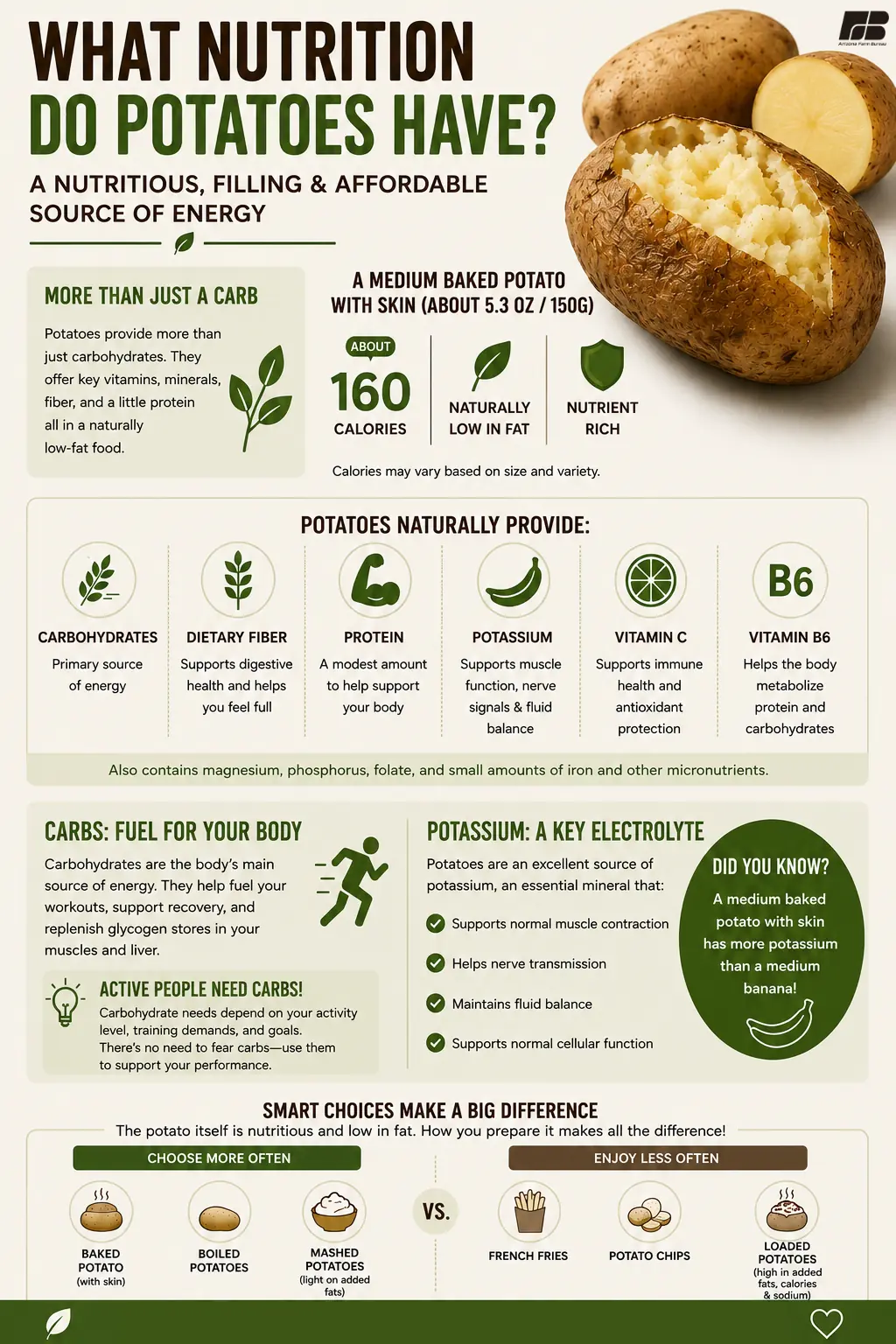
Let’s start with what you’re getting. A medium baked potato with the skin provides roughly 160 calories, although the exact amount depends on its size and variety. Most of those calories come from carbohydrates.
Potatoes generally provide:
- Carbohydrates
- Dietary fiber
- Protein
- Potassium
- Vitamin C
- Vitamin B6
- Magnesium
- Phosphorus
- Folate
- Small amounts of iron and other micronutrients
Plain potatoes are also naturally very low in fat. That’s worth emphasizing because potatoes sometimes get lumped in with high-fat potato foods. The potato itself isn’t naturally loaded with fat. French fries, potato chips, loaded baked potatoes, and similar foods can contain considerably more calories and fat due to their preparation. Understanding that distinction makes it much easier to evaluate potatoes based on what they provide.
Carbohydrates: The Potato’s Main Source of Energy
Carbohydrates make up most of the calories in potatoes. And that’s not automatically a bad thing. Carbohydrates are one of the body’s primary energy sources. After digestion, many carbohydrates are broken down into glucose, which can be used immediately for energy or stored as glycogen in the muscles and liver for later use.
For me, that completely changed the way I looked at carbohydrate-rich foods. Instead of asking, “How do I avoid carbs?” I started asking, “How can I use carbs to support what I’m trying to accomplish?” If I’m training hard, staying active, or recovering from exercise, my body needs energy. Foods like potatoes can help provide it.
The Academy of Nutrition and Dietetics, Dietitians of Canada, and the American College of Sports Medicine explain that carbohydrate availability is important for supporting exercise performance, particularly during moderate to high-intensity activity. That doesn’t mean everyone needs huge portions of potatoes. Your carbohydrate needs depend on your activity level, overall calorie requirements, training demands, and goals. The point is that carbohydrates aren’t something active people automatically need to fear.
They have a job to do.
Potassium: One of the Standout Nutrients in Potatoes
Bananas usually get all the attention when people talk about potassium, but potatoes are another notable source. Potassium is an essential mineral and electrolyte involved in several important processes. It helps support normal muscle contraction, nerve transmission, fluid balance, and normal cellular function.
According to the National Institutes of Health Office of Dietary Supplements, potassium is required for normal cellular function and plays important roles in nerve transmission and muscle contraction. This is especially interesting from a fitness perspective because muscle contraction and fluid balance are obviously important when you’re physically active. That doesn’t mean eating a potato replaces a hydration or electrolyte strategy during prolonged exercise. Sweat losses, environmental conditions, exercise duration, and sodium intake all matter. Instead, potatoes can simply be one of several potassium-rich foods that contribute to your overall diet.
Vitamin C: The Nutrient People Don’t Expect
When someone says vitamin C, potatoes probably aren’t the first food that comes to mind. Most of us think about oranges, lemons, or other citrus fruits. But potatoes naturally contain vitamin C.
Vitamin C acts as an antioxidant and is also required for collagen synthesis. Collagen is an important structural protein found in connective tissues, including skin, tendons, ligaments, and blood vessels. Vitamin C also contributes to normal immune function and helps the body absorb nonheme iron from plant foods.
The National Institutes of Health Office of Dietary Supplements provides a detailed overview of vitamin C’s roles in collagen production, antioxidant activity, immune function, and iron absorption. The amount of vitamin C in a potato can vary depending on storage and cooking methods, so potatoes shouldn’t be your only source. Still, it’s another example of why describing potatoes as “empty carbs” doesn’t really hold up.
Vitamin B6 and Energy Metabolism
Potatoes also provide vitamin B6. Vitamin B6 participates in more than 100 enzyme reactions, many of which involve protein metabolism. It also plays roles in carbohydrate metabolism, neurotransmitter synthesis, hemoglobin formation, and immune function. For active people, this is another reminder that food does more than simply provide calories.
Calories provide energy, but vitamins and minerals help your body carry out the processes needed to use nutrients effectively and maintain normal physiological function.
You don’t necessarily feel vitamin B6 working after eating a potato, but that doesn’t make its role any less important. Nutrition works behind the scenes every day.
Fiber: Why the Skin Matters
Potatoes can also contribute dietary fiber, particularly when you eat the skin.
Fiber supports digestive health and helps add bulk to stool. Higher-fiber foods can also contribute to a sense of fullness after eating, which may make it easier to build satisfying meals. The Harvard T.H. Chan School of Public Health notes that dietary fiber is associated with benefits for digestive, cardiovascular, and metabolic health. One easy way to retain more fiber is to leave the skin on when appropriate.
For example, I’ll often roast potatoes with the skin instead of peeling them. It’s less preparation, adds texture, and keeps more of the fiber in the meal. Of course, potatoes shouldn’t be your only fiber source. Fruits, vegetables, beans, legumes, nuts, seeds, and whole grains all contribute different types of fiber and nutrients.
Again, variety matters.
Do Potatoes Have Protein?
Yes, potatoes contain protein. They’re certainly not a high-protein food, and I wouldn’t rely on potatoes as my main protein source, especially when muscle growth or recovery is a goal. Still, the protein contributes to your total daily intake. This is where building a complete meal becomes important. Instead of eating potatoes alone, I might pair them with:
- Chicken
- Lean beef
- Eggs
- Salmon
- Greek yogurt-based toppings
- Beans
- Tofu
Now the potato provides carbohydrates, potassium, vitamin C, fiber, and other nutrients while the other food provides a more substantial amount of protein. That’s how I prefer to approach nutrition. I don’t need every individual food to be nutritionally perfect. I need the entire meal, and ultimately my overall diet, to give my body what it needs.
White Potatoes vs. Sweet Potatoes
This is probably one of the biggest potato debates.
Are sweet potatoes healthier than white potatoes?
Not necessarily. They’re nutritionally different, but both can be part of a balanced diet.
White potatoes are particularly notable for potassium and vitamin C, while sweet potatoes stand out because they’re rich in beta-carotene, which the body can convert into vitamin A. Sweet potatoes also provide carbohydrates, fiber, potassium, vitamin C, and several other nutrients.
Instead of thinking:
Sweet potato = good
White potato = bad
Think:
Different potatoes = different nutrient profiles.
If you enjoy both, there’s no reason you can’t rotate them. One night I might have roasted white potatoes with chicken. Another day, I might pair sweet potatoes with salmon. Dietary variety helps you get a broader range of nutrients while also keeping your meals from becoming boring.
If you’re still wondering which one deserves a spot on your plate, the answer doesn’t have to be one or the other. Both sweet potatoes and regular potatoes provide valuable nutrients, but their nutritional strengths differ. Sweet potatoes stand out for their beta-carotene content, while regular potatoes provide nutrients such as potassium and vitamin C. Ultimately, the better choice comes down to your nutritional needs, how you prepare them, and what you enjoy eating. For a closer comparison, Fill Your Plate, an Arizona agriculture and nutrition resource, examines the differences between the two in “Sweet Potatoes Versus Regular Potatoes: Which Is Healthier?“
Russet vs. Red vs. Yukon Gold Potatoes
Even within white potatoes, you’ll find several varieties.
Russet Potatoes
Russets are large, starchy potatoes with a fluffy interior when baked.
They’re great for:
- Baking
- Mashing
- Roasting
- Air frying
Their higher starch content also makes them useful when you want a carbohydrate-rich meal around physical activity.
Red Potatoes
Red potatoes tend to have a waxier texture and hold their shape well after cooking.
They work particularly well for:
- Roasting
- Soups
- Potato salads
- Sheet-pan meals
Leaving the red skin on also adds texture and helps retain fiber.
Yukon Gold Potatoes
Yukon Gold potatoes have a naturally creamy texture and slightly buttery flavor.
They’re excellent for:
- Mashing
- Roasting
- Boiling
- Meal prep
Nutritionally, the differences between common white potato varieties aren’t dramatic enough that most people need to obsess over which one is “healthiest.” Choose the type you enjoy and prepare it in a way that supports your goals.
What About Purple Potatoes?
Purple potatoes are another variety worth adding to the mix. Beyond their naturally vibrant color, they’re known to contain anthocyanins, the plant pigments responsible for their purple and blue hues. These compounds have antioxidant properties, giving purple potatoes a slightly different nutritional profile from more familiar white, yellow, and red varieties.
For me, they’re also a good reminder that variety matters. Rotating different types of potatoes can add new flavors, colors, and nutrients to meals without making healthy eating complicated. Purple potatoes can be roasted, baked, boiled, or added to many of the same meals where you’d normally use red or Yukon Gold potatoes. If you’ve never tried them, Fill Your Plate takes a closer look at their nutrition, growing popularity, and uses in Purple Potatoes Gain Popularity as We Discover Their Nutritious Tastiness.
Potatoes for Fitness and Exercise
Potatoes fit extremely well into an active lifestyle because they provide carbohydrates, potassium, and other micronutrients. Before training, carbohydrates can help ensure your body has adequate energy available. After training, carbohydrates help replenish glycogen stores used during exercise. That makes potatoes particularly useful as part of a recovery meal.
For example:
Grilled chicken + roasted potatoes + vegetables
The chicken provides protein for muscle repair. Potatoes provide carbohydrates that help restore energy stores. Vegetables add fiber, vitamins, minerals, and beneficial plant compounds. Simple. You don’t need every post-workout meal to involve supplements or specialized sports foods. Regular foods can do the job. Timing matters too. A huge serving of potatoes immediately before an intense workout might not sit well for everyone. Personally, I’d rather have a moderate portion as part of a meal with enough time to digest before training. The closer you get to your workout, the more digestion and individual tolerance matter.

Are Potatoes Good for Weight Loss?
Potatoes can absolutely fit into a weight-loss diet. This is another area where their reputation doesn’t always match reality.
Weight loss ultimately requires maintaining an energy deficit over time. Whether potatoes help or hurt that process depends on portion size, preparation, what you eat with them, and the rest of your diet. Interestingly, potatoes can be quite filling.
That doesn’t mean potatoes magically cause weight loss. But it does challenge the idea that potatoes automatically need to disappear when someone wants to lose body fat.
A baked potato with grilled chicken and vegetables is very different from a large serving of fries with a high-calorie dipping sauce. Same basic ingredient. Completely different nutritional context.
Potatoes and Blood Sugar
Because potatoes contain a significant amount of starch, they can raise blood glucose after eating. The magnitude of that response isn’t always the same.
It can vary based on:
- Potato variety
- Cooking method
- Portion size
- What else you eat with the potato
- Individual glucose tolerance
Instead of eating a large serving of potatoes by itself, combining it with protein, fiber-rich vegetables, and healthy fats creates a more balanced meal. People with diabetes or other conditions affecting blood glucose should follow individualized advice from their physician or registered dietitian rather than relying on broad food rules. For everyone else, there’s usually little reason to judge the healthfulness of an entire diet based on the glycemic index of one food.
Context matters.
Does Cooking Change Potato Nutrition?
Absolutely. And this is one of the most important parts of understanding potato nutrition.
A plain baked potato is naturally low in fat. Once you deep-fry it in oil, add large amounts of cheese, butter, bacon, sour cream, or other calorie-dense toppings, the nutritional profile changes considerably. That doesn’t mean you can never eat fries. It simply means that the nutrition of a potato and the nutrition of a potato-based dish aren’t necessarily the same thing.
Some practical preparation methods include:
- Baking
- Boiling
- Roasting
- Air frying
- Steaming
For roasted potatoes, I’ll usually use a reasonable amount of olive oil and season them with herbs and spices. You still get crispy, flavorful potatoes without needing to turn them into an extremely calorie-dense meal.
What About Resistant Starch?
Here’s where potatoes get even more interesting. When potatoes are cooked and then cooled, some of their digestible starch can undergo retrogradation, forming resistant starch. Resistant starch isn’t completely digested in the small intestine. Instead, some reaches the large intestine, where it can be fermented by gut bacteria. That doesn’t mean you need to start eating cold potatoes with every meal. But it does demonstrate something important: food preparation can affect how our bodies digest and respond to foods.
Cooked and cooled potatoes can work particularly well in potato salads or meal-prep dishes. Reheating may reduce resistant starch, though some may remain. It’s a useful nutritional detail, but it shouldn’t distract from the basics. A balanced diet matters far more than trying to optimize every gram of starch.
Knowing what’s inside the foods you eat is a great start. The next step is figuring out how those foods fit together based on your body, activity level, schedule, and goals. If you’re tired of guessing what to eat or cutting out foods because you’ve heard they’re “bad,” personalized nutrition coaching can help you build a realistic, sustainable strategy. The goal isn’t perfection. It’s learning how to fuel your body with purpose and creating habits you can maintain.
By Joel Carr, Arizona Farm Bureau Strategic Manager



Featured Recipes

COTTAGE CHEESE & BLUEBERRY BREAKFAST BAKE
Read More
Warm Your Soul Lasagna Soup
Read More

Pear Lime Jello Salad
Read More