Blog
National Pork Month: Budget-Friendly Arizona Pork with Big Flavor
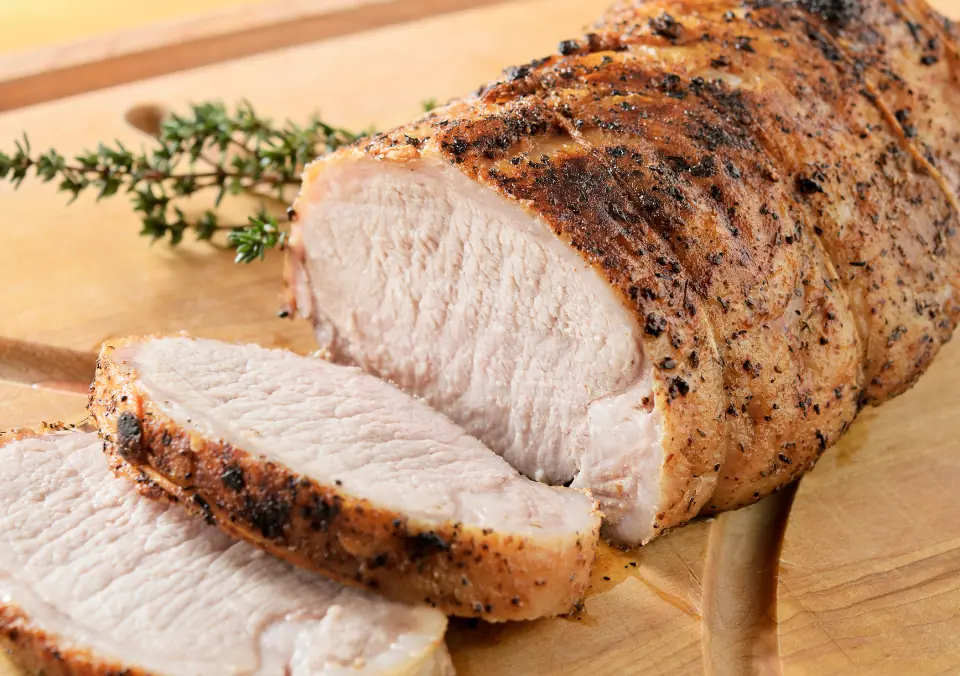
When Arizona families plan dinner, pork is rarely the mystery protein. It is the bacon that starts a Saturday, the chops that come off the grill in Tucson, the shoulder that becomes carnitas or pulled pork for a crowd in Phoenix. National Pork Month is a good reminder of why that habit makes sense: pork tastes good, stretches a grocery budget, and fits the way we cook.
Pork is one of the world’s most widely eaten meats, long accounting for roughly a third of global meat consumption and staying neck-and-neck with poultry. That scale is interesting. What matters at an Arizona table is simpler. Pork takes a marinade. It takes smoke. It takes the same chile, citrus, and spices already in the pantry. A mild chop becomes whatever the rest of the plate needs it to be.
The National Pork Board’s “Taste What Pork Can Do” campaign, launched in May 2025, is built on that idea. Pork should not be treated only as a special-occasion protein and not just “the other white meat.” It is an everyday flavor that younger eaters already know from bacon, sausage, and global dishes, and that the rest of us can put to work on a weeknight.

Arizona Families Raising and Cooking It
Arizona is not Iowa, and it does not need to be. The state’s pork sector is smaller than the big Midwestern production states, but it is still real.
Arizona has one major commercial pork farm, Yosemite Foods, along with direct-market operations and smaller farms that raise pigs for 4-H and FFA youth. USDA figures cited in industry analysis put the state’s pork gross cash receipts in a range of about $45 million to $65 million. An industry report from the National Pork Producers Council estimates that roughly 600 jobs are tied to the Arizona pork value chain, from input suppliers and producers to processors, handlers, and the main-street businesses those employed in the industry support. Based on 2023 production levels, that same analysis found the industry supports an estimated $46.84 million in personal income and $79.78 million in gross national product. Hog inventories have moved over the years: 145,000 head in 1997, 180,000 in 2011, and 109,000 by December 2023.
Those numbers show up closer to home than a spreadsheet suggests. On a recent Rosie on the House show, guest Vicki Trump, owner of Arizona Berkshires, talked about a show-pig operation that serves youth in 4-H and FFA. For many Arizona families, that is the first close look at how pork gets to the plate: a project animal, a fair, and a lesson in care and responsibility. The full episode is at the bottom of this article.
Direct-market farms give other families a way to buy local cuts. Fill Your Plate lists producers and processors across the state for anyone who wants pork with an Arizona name on it.
Pork Meat: A Cornucopia of Flavor
Demand for pork stays high for a practical reason. Pigs convert feed efficiently, reach market weight relatively quickly, and produce a meat that takes spices, smoke, and sauces from nearly any cuisine. In China, dishes such as char siu, sweet-and-sour pork, and dumpling fillings make pork a staple. High per-capita consumption in parts of Europe, South Korea, and the Americas adds more volume. The same flexibility shows up in Arizona kitchens: Chile Verde, street tacos, a sheet-pan tenderloin, smoked ribs for a backyard cookout.
“Taste What Pork Can Do” leans into that range. The National Pork Board built it as a digital-first effort aimed at Millennials and Gen Z, with flavor and versatility. Early work included a New York pop-up with chef Joshua Weissman. Later recipes with chef Marcus Samuelsson covered American sticky ribs, Mexican pork-belly tacos, Japanese ham-hock fried rice, and Brazilian-style grilled tenderloin. The goal is to move pork from an occasional purchase — the average U.S. consumer buys it only a handful of times a year — into the regular menu rotation. Key social media cooks have been showing the same thing: pork is not hard to cook, and it belongs in the center of the plate.
The science backs the kitchen instinct. The National Pork Board’s nutrition team, led by Dr. Kristen Hicks-Roof, a registered dietitian and the board’s Director of Human Nutrition, points to a 2024 sensory analysis that mapped an unusually wide flavor range in pork — more than 110 distinct nuances.
The study, led by Lisbeth Ankersen of InnovaConsult, found 111 unique flavor nuances across pork muscle and offal, and about 30 in pork fat alone. Those notes are not only savory. They include sweet, fruity, and floral tones, plus clove, hazelnut, mushroom, walnut, and coconut, all without a packet of spices. Pork also registers sweet, salty, acidic, and umami, and kokumi, a Japanese term for a lingering richness that sits outside the classic five tastes.
Plus, lean pork scored the most intense umami of the plant and animal proteins compared in the work. Cooking method changes which taste notes come forward. Air-fried tenderloin and roasted pork roast ranked among the juiciest and sweetest preparations. The research also produced flavor wheels so pairings can be matched to specific cuts.
Hicks-Roof’s point is the one home cooks already know: flavor drives what people eat again. In the board’s framing, pork works as a flavor vehicle. Its umami and those secondary notes make it easy to pair with fruit, vegetables, and sauces, so a balanced plate does not have to taste plain. Board member Gordon Spronk has summed it up as pork having “over 100 flavors,” which is why it fits so many cultures. Char siu, carnitas, pepperoni, smoked ribs, or a simple weeknight chop can all start from the same meat.
What a Pork Serving Actually Gives You
A 3-ounce serving of cooked lean pork, such as tenderloin, supplies more than 20 grams of protein. It is a strong source of thiamin, selenium, niacin, riboflavin, vitamin B6, and vitamin B12. Tenderloin is also American Heart Association Heart-Check certified.
Compared with similar cuts, pork is a solid source of zinc, iron, and B vitamins, and it supplies more protein than chicken in comparable cuts. About a third of the fat in bacon is oleic acid, the same monounsaturated fat found in olive oil. Federal rules prohibit added hormones in U.S. swine production, so American pork does not contain them.
Beyond the plate, pigs have a long role in medicine. Insulin and roughly 40 other medicines have been derived from them, and pig heart valves have long been used to replace damaged human valves. More than 500 non-meat products also come from pigs, from leather and certain cosmetic ingredients to adhesives and industrial materials.

A Few Things the Pig Gets Right
Pigs are more interesting than the cartoon version. They rank among the smarter livestock species. They can learn commands, recognize their names, and even use simple tools. They are generally clean and avoid soiling the areas where they sleep or eat. Mud-rolling is mainly a way to cool off, because they have few sweat glands.
Newborn piglets weigh about 2.5 pounds and can double that in a week. They recognize their mother’s voice. Their strongest sense is smell — strong enough that truffle hunters have historically used pigs to find the fungi. Grunts convey excitement, contentment, or stress, and a squeal can hit 110–115 decibels. They can cover a mile in about seven minutes.
European settlers brought pigs to North America, and salt pork helped sustain Continental troops at Valley Forge in the winter of 1776 to 1777. Swine were among the earliest domesticated animals. A market hog that reaches 250 pounds will have eaten roughly 600 pounds of corn and 100 pounds of soybean meal.
What to Put on The Week’s Menu
Arizona’s farms — commercial, direct-market, and youth-project — are part of a much older story. The “Taste What Pork Can Do” message still lands on a Taco Tuesday in Phoenix or a backyard grill in Tucson: flavor, nutrition, and a cut that fits the meal you already know how to cook.
This month, start with one of these:
- Pork tenderloin on a sheet pan with sweet potatoes and Arizona pecans
- Slow-cooker Chile Verde or carnitas for tacos through the week
- Thick-cut chops with a quick spice rub, finished on the grill
- Ground pork in meatballs, fried rice, or a weeknight pasta
Look for Arizona pork on Fill Your Plate, browse the pork recipes already in the farm-family collection, and listen to Vicki Trump’s Rosie on the House conversation below. National Pork Month is less about a slogan than about the next dinner that actually gets eaten.
By Julie Murphree, Arizona Farm Bureau Director of Communications


Featured Recipes
COTTAGE CHEESE & BLUEBERRY BREAKFAST BAKE
Read More
Warm Your Soul Lasagna Soup
Read More

Pear Lime Jello Salad
Read More