
Blog
Dairy’s Superstar Sustainability Story
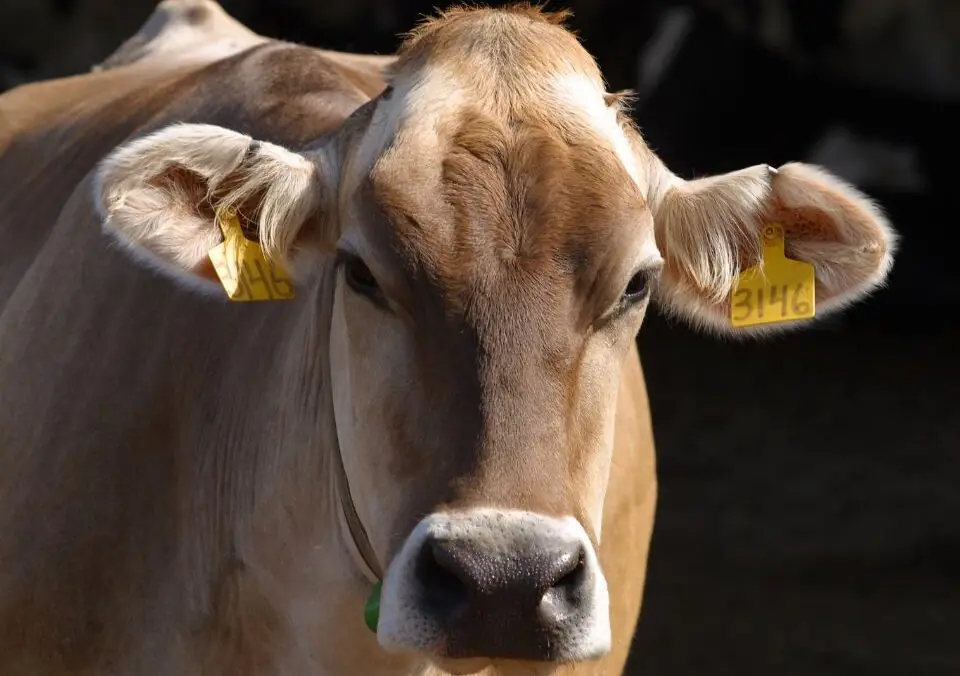
As June annually marks National Dairy Month, Arizona Farm Bureau and our dairy farmers would like to share some of our favorite facts about dairy sustainability.
Arizona’s dairy industry stands as a model of modern agricultural resilience, transforming challenges like arid climate and resource constraints into opportunities for sustainability leadership. Through the United Dairymen of Arizona (UDA) cooperative and support from organizations like Arizona Milk Producers, the state’s dairy families integrate sustainability across every aspect of their operations—from farm-level animal care to processing, distribution, and community engagement.
According to UDA’s reports on uda.coop, these sustainability efforts demonstrate how farmer-owned cooperatives can drive meaningful progress in environmental stewardship while maintaining high standards for animal welfare and product quality.
Founded in 1960, UDA markets milk from Arizona dairy families and embeds sustainability into its core mission. The cooperative handles everything from milk collection to processing and delivery, ensuring that best practices scale from individual farms to the entire food supply chain. This integrated approach is particularly vital in Arizona, where water efficiency and heat management are not optional but essential for long-term viability.
“There is no greater farmer than the American farmer, and I would say the Arizona farmer,” said former dairy farmer Sine Kerr, the current executive director for the United States Department of Agriculture’s (USDA) Farm Service Agency.
Turning Waste into Energy: Methane Digesters Power Progress
One of the most visible innovations in Arizona dairy sustainability involves methane digesters. Several member farms, including Paloma Dairy/Sunset Farms and Triple G Dairy, operate these systems to capture biogas from manure and organic waste. According to uda.coop, a single digester can generate up to 5 million kilowatt-hours of electricity—enough to power more than 400 households annually. The process captures methane, a potent greenhouse gas, preventing its release into the atmosphere while recovering water for irrigation and producing nutrient-rich fertilizer from the remaining solids.
During an ABC15 interview with Arizona dairy farmer Jennifer (Jen) Millican, manager at Stotz Dairy in Buckeye, (a second-generation dairy farmer overseeing operations with thousands of cows), ABC15 captured Millican saying,
“Sustainability has always been one of our big things.”
The methane digester system at Stotz Dairy collects wastewater from around 20,000 cattle (across operations), filters solids for fertilizer, and uses a large covered pond/tarp to capture methane, which powers a generator. It produces enough energy to power roughly 450 to 487 homes. The farm has been highlighted in Arizona dairy sustainability resources for turning “poo into power.”
Beyond electricity, digesters reduce odors, minimize waste, and create new revenue streams for farms. This circular approach exemplifies how Arizona dairies turn potential liabilities into assets.
In an era of increasing focus on climate impacts, these on-farm technologies position the industry as a proactive partner in emissions reduction rather than a passive contributor.
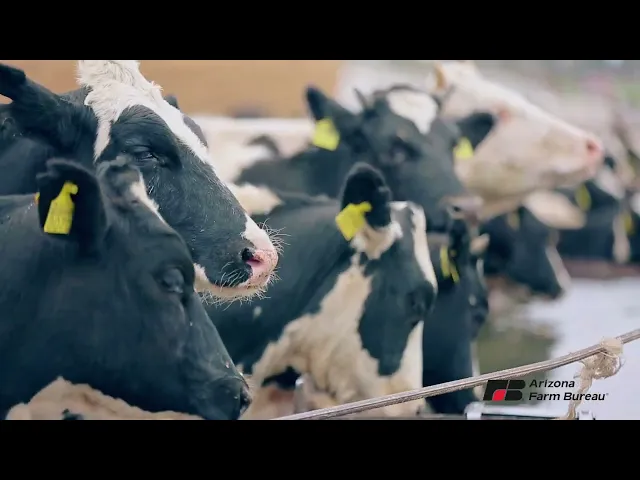
Water: Every Drop Counts in Arizona’s Arid Landscape
Water conservation stands at the heart of Arizona dairy operations. Farms recycle water multiple times—up to six cycles—for cooling milk, cleaning equipment, flushing barns and lanes, and irrigating crops via manure lagoons. At the UDA processing facility, approximately 32% of water is recycled and reused in boilers, cooling towers, and cleaning processes, according to arizonamilk.org.
Clint Gladden of Saddle Mountain Dairy in Buckeye, Arizona (fourth-generation farmer) is quoted in the Arizona Beef Blog saying, “We recycle all water and utilize the manure from the cows as fertilizer on the crops that we raise to feed our cows.” This is part of broader sustainable practices on their family farm, which has been operating in Arizona since the late 1930s.
At the Arizona Dairy Company, they also highlight 100% reuse of their water in their flush lanes, ensuring nothing goes to waste while keeping their barns clean and their cows comfortable. Additionally, they recycle 100% of their operation’s manure through a methane digester.
Recycling water on dairy farms is second nature and a common sustainability practice.
Advanced systems, precision monitoring, and careful management help minimize waste in one of the nation’s driest states. These water conservation practices reflect decades of adaptation to local conditions, leaning on innovation to improve how they recycle water.
Plus, Arizona dairies have optimized water use through engineering improvements and behavioral changes on the farm, ensuring that milk production aligns with the state’s limited resources. The result is not only greater efficiency but also stronger resilience against drought cycles common to the Southwest.
Waste Diversion and Byproduct Innovation
UDA achieves remarkable waste diversion rates, sending just 0.4% of materials to landfills—or diverting 99.6%—according to cooperative sustainability updates on uda.coop. Cows receive nutritious feed made from byproducts of other industries, including brewers’ grains from beer production and Mother Lactose Liquor from lactose processing. This “upcycling” reduces the need for new feed inputs while supporting circular economy principles.
Arizona dairies repurpose various food waste and byproducts unsuitable for human consumption as nutritious cattle feed. This sustainable practice helps reduce landfill waste, lowers methane emissions, cuts feed costs, and supports environmental goals.
Dairies partner with grocers (e.g., Walmart, Sam’s Club, Safeway), processors, and agricultural operations to collect and upcycle these items.
Examples include:
- Produce and vegetable/fruit scraps — “Ugly” or unsellable vegetables, fruits, and related waste.
- Almond shells, hulls, and related byproducts.
- Cottonseed and gin trash — Agricultural byproducts from cotton processing.
- Bakery products — Expired or unsold bread, pastries, etc.
- Ice cream and dairy processing byproducts — Out-of-spec or returned items.
- Citrus pulp and other fruit/vegetable processing waste.
- Additional items like distillers’ grains or other food manufacturing scraps.
One Arizona dairy alone diverts the equivalent of more than 1,400 truckloads of such materials from landfills annually through this feeding program.
Up to one-third of a dairy cow’s diet can come from these byproducts, which provide energy, fiber, and nutrients while keeping them out of landfills.
Manure management adds another layer of sustainability. Multiple farms compost manure for use as organic fertilizer and soil amendment. This practice improves soil health, enhances moisture retention, reduces erosion, and lowers emissions. By returning nutrients to the land, Arizona dairies close nutrient loops that benefit both their operations and surrounding ecosystems.
Emissions Reductions and Operational Efficiency
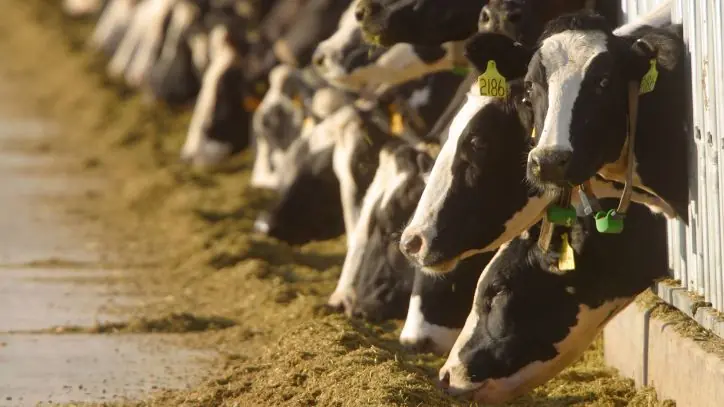
Arizona dairies contribute to broader U.S. dairy trends showing significant reductions in environmental footprint over recent decades. Improvements in genetics, feed formulation, and herd management have lowered greenhouse gas emissions, water use, and land requirements per unit of milk produced. UDA itself has reduced Scope 1, 2, and 3 emissions since 2018. The cooperative has also transitioned 31 trucks to Compressed Natural Gas (CNG) powered by Renewable Natural Gas and deployed super tankers for more efficient hauling. These changes yielded a 10% reduction in fleet GHG emissions, fewer total miles, and lower diesel consumption between 2014 and 2018, per uda.coop data.
Many Arizona farms perform better than regional averages in greenhouse gas emissions per pound of milk. Crop and land management practices further support carbon sequestration, while soil health initiatives on feed-producing acreage enhance long-term productivity and environmental benefits.
Prioritizing Animal Care in a Hot Climate
Sustainability extends beyond the environment to the animals themselves. Arizona dairy farmers invest heavily in cow comfort, recognizing that healthy, content animals produce higher-quality milk and contribute to overall farm efficiency. Veterinary care, nutritionists, and balanced diets tailored to each stage of a cow’s life form the foundation. In Arizona’s intense summer heat, advanced cooling systems—such as fans, misters, and shaded areas—help maintain cow well-being. While is might be 110 degrees, step inside the shaded, misted areas and it can be as cool at 67 degrees.
All UDA member farms participate at 100% in the National Dairy FARM Animal Care Program, a comprehensive initiative covering housing, handling, and health protocols. Additional training programs like “DairyKind” reinforces best practices. According to UDA materials, these commitments ensure rigorous standards while fostering continuous improvement in animal husbandry.
Transparency, Accountability, and Community Impact
Arizona dairies embrace voluntary national frameworks, including the U.S. Dairy Stewardship Commitment, which UDA helped shape through development of key measurement tools. The industry pursues transparent reporting under Global Reporting Initiative (GRI) standards, releasing documents such as the 2025 Materiality Assessment Report and ongoing “Crop to Co-op” Stewardship Updates.
External validation underscores these efforts. UDA has earned Platinum EcoVadis ratings—placing it in the top 1% globally—for performance in environment, labor practices, ethics, and sustainable procurement. Beyond environmental metrics, the industry focuses on workforce development, food safety, and community service. Dairy families and employees log hundreds of volunteer hours supporting local causes, strengthening ties between farms and Arizona communities.
Aligning with National Goals and Local Realities
Arizona’s dairy sustainability initiatives align closely with U.S. Dairy’s ambitious goal of greenhouse gas neutrality by 2050. Nationwide, innovations in genetics, technology, and management have already delivered substantial reductions in water, land, and carbon footprints per gallon of milk. In Arizona, these national trends adapt to desert-specific challenges, including advanced heat abatement and hyper-efficient water systems.
The industry’s progress reflects collaboration among farmers, cooperatives, processors, and supporting organizations. By sharing knowledge and investing in research, Arizona dairies continue refining practices that balance productivity with planetary health.

Looking Forward: A Sustainable Future for Arizona Milk
As consumer demand for transparency and environmental responsibility has grown, Arizona’s dairy sector demonstrates that agriculture can evolve responsibly while feeding families and supporting rural economies. The combination of cutting-edge technology—like methane digesters and CNG fleets—with time-honored values of animal care and land stewardship positions the industry for continued success.
Challenges remain, particularly around water availability and climate pressures, but the track record of innovation suggests Arizona dairies will meet them head-on. Through ongoing commitment to data-driven improvements, circular systems, and community partnership, the state’s milk producers are not just producing a wholesome product—they are stewarding resources for future generations.
Farmers, policymakers, and consumers alike have reason to take pride in Arizona dairy’s sustainability journey. As detailed across UDA and Arizona Milk Producers resources, these efforts illustrate how a desert-state industry can lead rather than follow in the national conversation about responsible food production. The next chapter will likely bring even greater integration of technology, policy support, and public awareness—ensuring that Arizona milk remains a source of both nutrition and environmental pride.
Said former Arizona dairy farmer Wes Kerr,
“Today dairy cattle are far more productive, healthier and produce higher quality milk than ever before in history. People often speak of ‘the good old days,’ but when I look at the data it becomes apparent to me that perhaps the ‘the good old days’ are today. I sometimes wonder what my great-grandfather would say if he could see the practices we use today. I suspect that he would find them incredible.”
Kerr, who now works for a feed milling company that serves the dairy industry, has explained how his research in dairy cow genetics and more has helped give him a broader understanding of the industry he grew up in.
The Arizona Beef Blog shares the following statistic: The carbon footprint of a glass of milk has dropped by two-thirds since 1944. We’re using less land, less water, fewer cows, and producing more milk. It’s a fantastic story of embracing science and technology in our farming practices.
By Julie Murphree, Arizona Farm Bureau Director of Strategic Communications


Featured Recipes


COTTAGE CHEESE & BLUEBERRY BREAKFAST BAKE
Read More


Warm Your Soul Lasagna Soup
Read More

Pear Lime Jello Salad
Read More